In a world where home decor cycles faster than fashion trends, one material defies the rhythm: crystal. While most accessories fade into the background-or worse, into storage-certain pieces hold their ground, catching light and memory in equal measure. These aren’t merely vases or bowls; they’re heirlooms in the making, objects that anchor a room not because of their size, but because of their presence. The difference lies not in cost or origin, but in intention: to bring something into your home that deserves to be passed down.
The art of selecting crystal for your interior
Not all clear glass is crystal, and not all crystal is created equal. True crystal is defined by its density and lead content, which together amplifylight refraction in a way that ordinary glass simply can’t replicate. But beyond chemistry, it’s the human hand that turns material into meaning. When artisans cut each facet by hand, they’re not just shaping glass-they’re sculpting how light will dance across your walls at different times of day. This kind of precision can’t be automated. Machines may produce uniformity, but only a master cutter can balance symmetry with soul.
Mass-produced decor often sacrifices depth for speed, resulting in pieces that sparkle briefly under showroom lights but lose luster in real settings. In contrast, mouth-blown crystal carries subtle variations-a fingerprint of the craft. Interiors gain a soul when they host objects of excellence, where a decorative crystal vase becomes the bridge between master craftsmanship and your daily environment. It’s this dialogue between tradition and lived space that makes crystal more than an ornament-it becomes part of the home’s narrative.
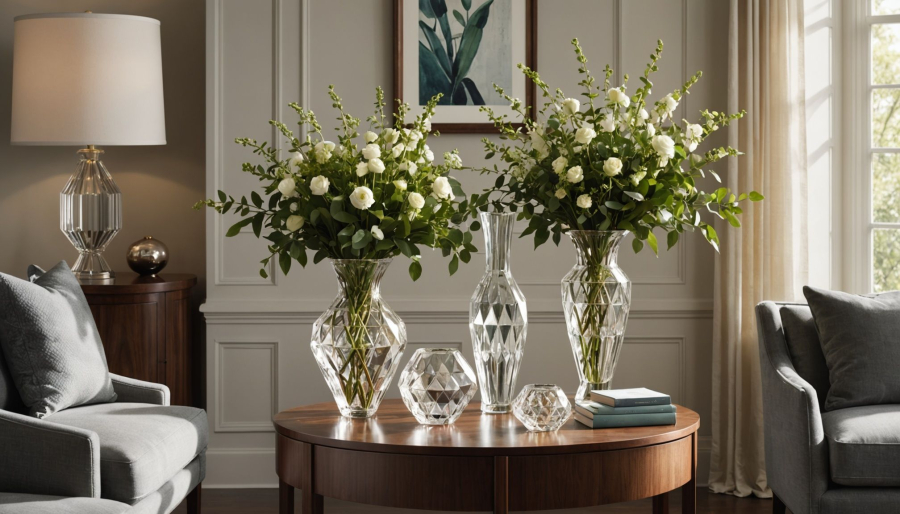
Comparing crystal shapes and light effects
Finding the right silhouette for your space
The shape of a crystal vase does more than hold flowers-it directs light, guides the eye, and sets the tone of a room. A low, flared silhouette on a dining table creates a radiant prism effect when lit from above, scattering rainbows subtly across linens and silverware. Taller, slender forms work well on consoles or mantels, drawing vertical lines that balance wide walls or low ceilings. And sculptural designs-those that break from traditional symmetry-serve as standalone art pieces, especially in minimalist environments where a single focal point carries weight.
The way light interacts with crystal also depends on the cut. Beveled edges scatter light broadly, ideal for rooms with consistent natural light. Diamond cuts, with their deep, geometric precision, create sharp sparkle under focused lighting, making them particularly effective near dimmable LEDs. Flat facets offer a more restrained glow, perfect for spaces aiming for elegance without drama. Placement matters just as much as design: a bud-shaped vase on a nightstand offers a soft glow at eye level, while a bold, sculptural piece in an entryway commands attention from the moment you walk in.
| Vase Silhouette | Light Interaction | Ideal Placement |
|---|---|---|
| Bud | Soft Glow | Nightstand |
| Flared | Radiant Prism | Dining Room |
| Sculptural | Sharp Sparkle | Entryway |
Professional styling tips for a cohesive gallery look
The rule of three in crystal arrangements
When grouping crystal pieces, avoid symmetry that feels too rigid. Instead, apply the rule of three: vary heights, textures, and functions to create rhythm without repetition. A tall, slender vase paired with a short bowl and a medium sculptural piece creates visual movement. The key is contrast-mixing smooth surfaces with deeply cut ones, or pairing a colored crystal with two clear pieces to let it stand out.
Floral pairings that respect the crystal
Let the vase lead the composition. For intricately cut crystal, opt for minimalist greenery like eucalyptus or olive branches-these allow the craftsmanship to remain the focus. With smooth, modern surfaces, bold blooms like peonies or calla lilies can shine without competing. And in cases where the vase itself is a sculptural statement, consider using it dry: a single crystal piece without flowers can be more powerful than any arrangement.
- Clean with a soft, lint-free cloth to preserve surface clarity
- Observe natural light patterns before final placement
- Mix periods and styles-pair antique crystal with contemporary frames
- Use dimmable lighting nearby to adjust ambiance throughout the day
- Consider water clarity; filtered or distilled water prevents mineral buildup
Personalizing your decor through colorful accents
The impact of colored crystal
Color transforms more than appearance-it alters the energy of a room. Amber crystal warms a space, making it feel inviting in colder months. Deep blue or green introduces a sense of calm, ideal for living rooms or reading nooks. Red or ruby-toned pieces are rare and bold, best used as accents in neutral environments where they can truly stand out. These hues aren’t applied with paint or coating; in traditional mouth-blown crystal, pigments are fused into the molten glass, ensuring the color remains rich and consistent through generations.
Seasonal rotations in the living room
Just because a piece is valuable doesn’t mean it should be locked away. Rotate crystal decor with the seasons: a light, clear vase in spring and summer, a deeper amber or cobalt piece in autumn and winter. This keeps the space feeling fresh without diminishing the object’s significance. Even moving a vase from the center of the dining table to a sideboard or mantle can renew its presence.
Integrating crystal into modern minimalist contexts
In a white-walled, sparsely furnished room, a single heavy crystal vase creates instant sophistication. It acts as a counterweight to emptiness, a point of warmth and complexity. The contrast between industrial finishes-like steel or concrete-and the organic brilliance of hand-cut crystal is striking. This isn’t about clutter; it’s about curation. One perfect piece, thoughtfully placed, speaks louder than a dozen decorative fillers.
Caring for your heritage pieces
Preserving brilliance for future generations
Crystal is durable, but not indestructible. Sudden temperature changes-like filling a cold vase with hot water-can cause thermal shock, leading to microfractures that weaken the structure over time. Always bring pieces to room temperature before use. When cleaning, avoid harsh detergents or abrasive cloths; mild soap and lukewarm water are sufficient. Hard water leaves mineral deposits that dull the surface, so drying thoroughly is essential. For long-term storage, wrap pieces in acid-free tissue and keep them in a stable, dry environment. These aren’t just cleaning tips-they’re rituals of preservation, part of the French art de vivre that values objects as companions through life.
Commonly asked questions
Is there a difference in care for clear versus colored crystal?
Colored crystal, especially traditionally mouth-blown pieces, may contain pigments sensitive to prolonged UV exposure. While both types require gentle cleaning, it’s best to display colored crystal away from direct sunlight to preserve its hue. Otherwise, care routines are nearly identical-avoid chemicals and extreme temperatures.
Can I use a sculptural crystal vase for dried flowers?
Absolutely. Dried flowers or natural elements like branches or pampas grass work beautifully in sculptural vases. Without water, there’s no risk of mineral buildup, and the arrangement can last for months. Just dust gently to maintain the piece’s clarity and brilliance.
How are modern dimmable lighting trends affecting crystal displays?
Dimmable LEDs with high CRI (Color Rendering Index) enhance crystal’s natural sparkle by mimicking daylight. Lower CRI lights flatten the material’s depth, while adjustable warmth settings let you shift the ambiance-from crisp and bright to soft and intimate-without moving the vase.
What is the best way to move a heavy crystal vase safely?
Always lift with both hands, supporting the base and midsection. Avoid gripping by the neck or rim, which can create stress points. Let the vase acclimate to room temperature first, and move it slowly to prevent jostling. For long-distance transport, use custom padding to absorb vibration.
